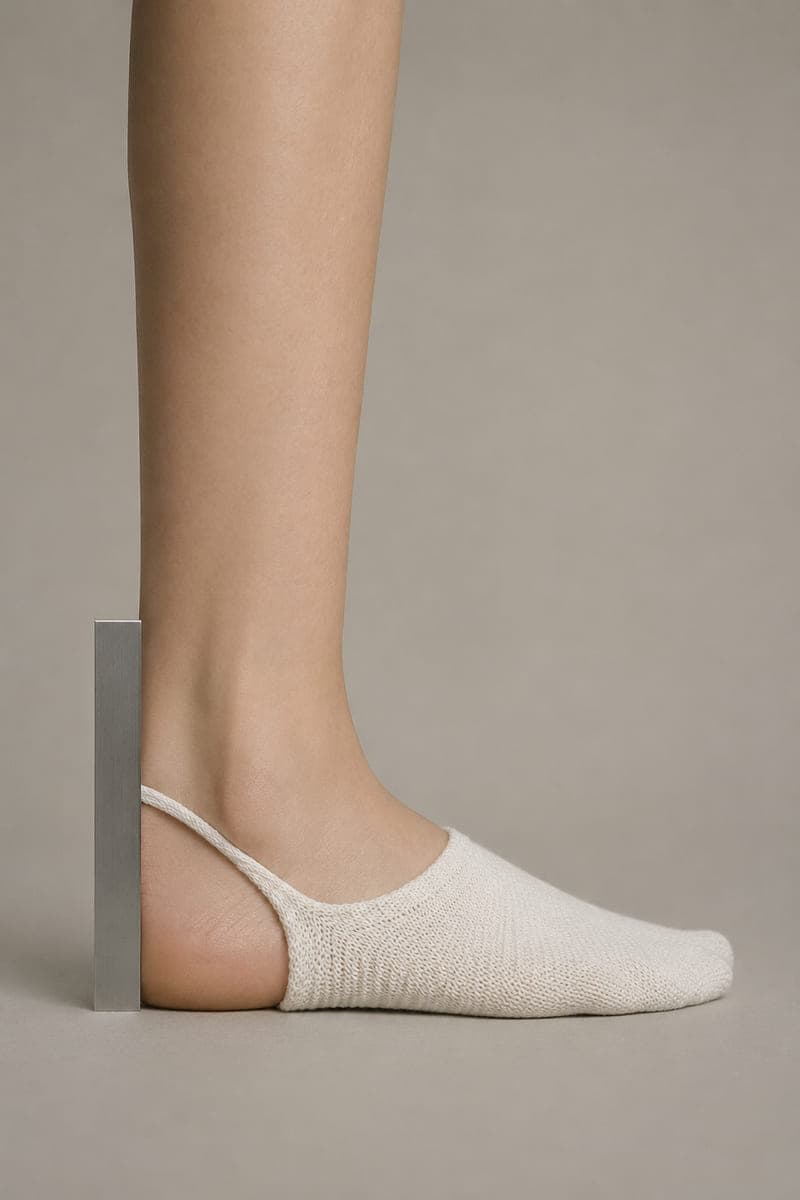
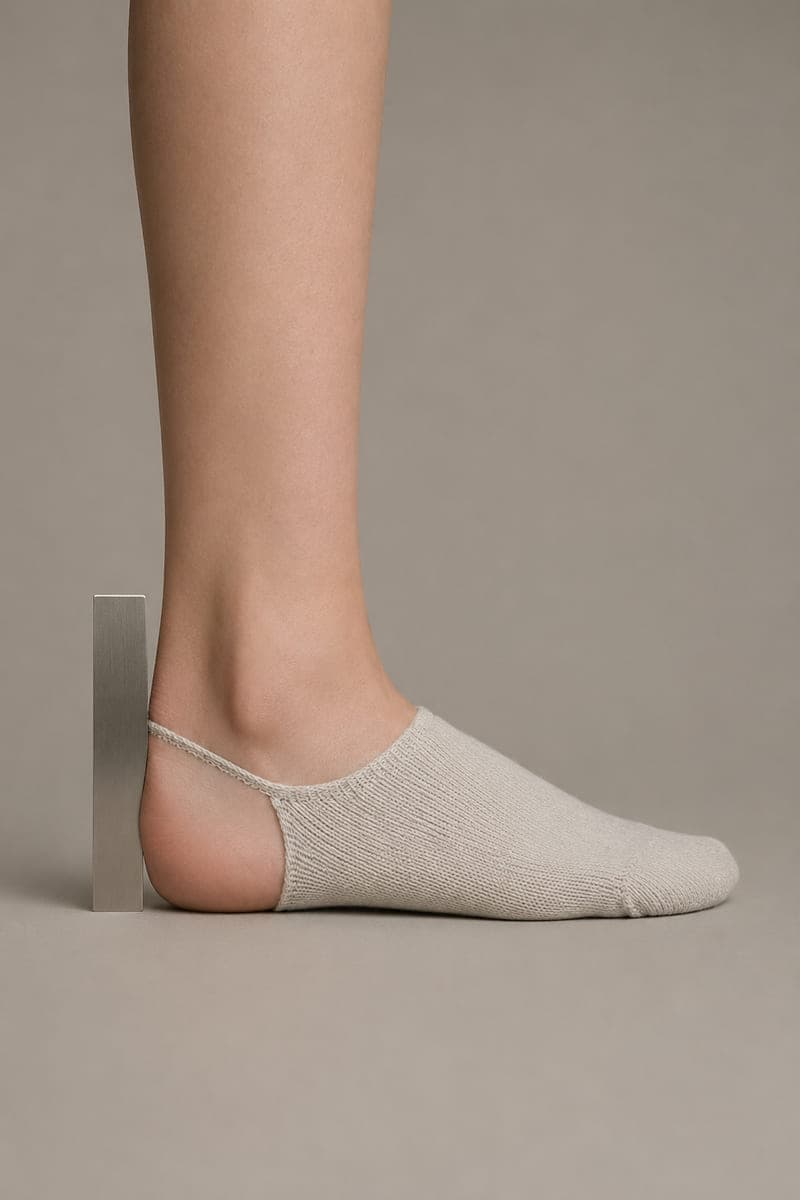
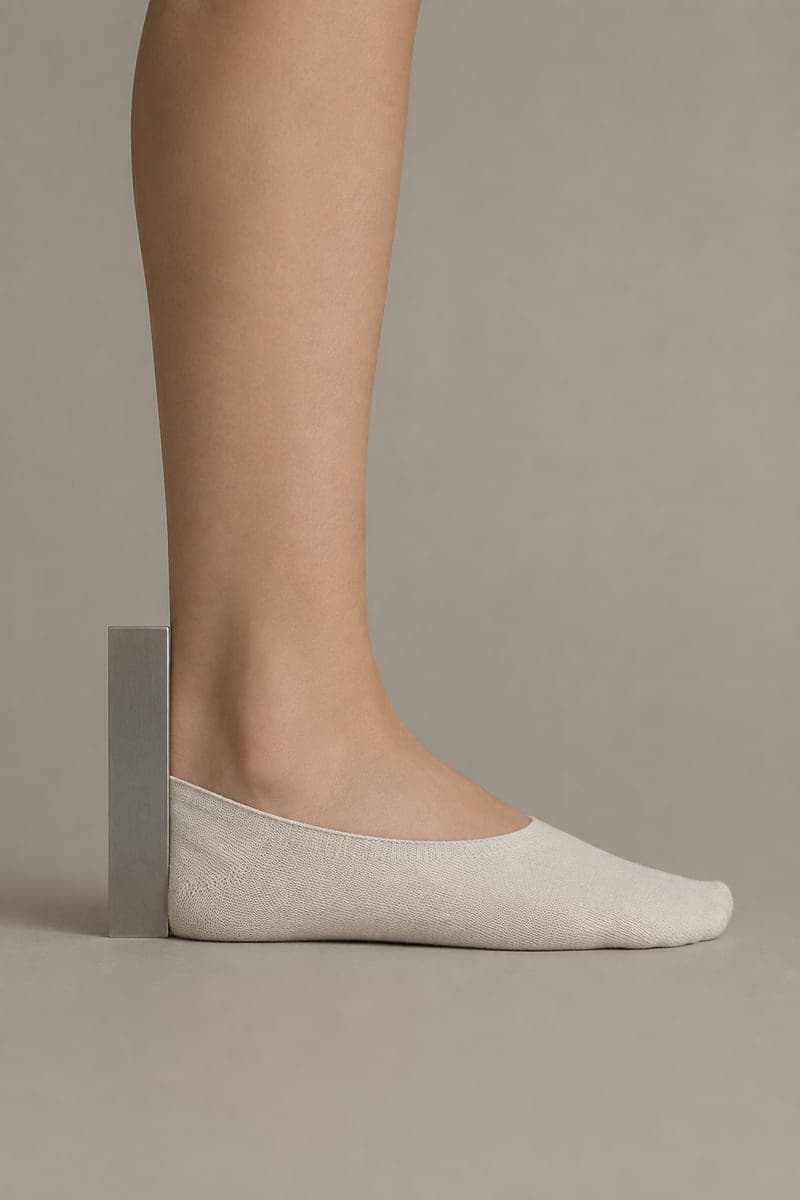
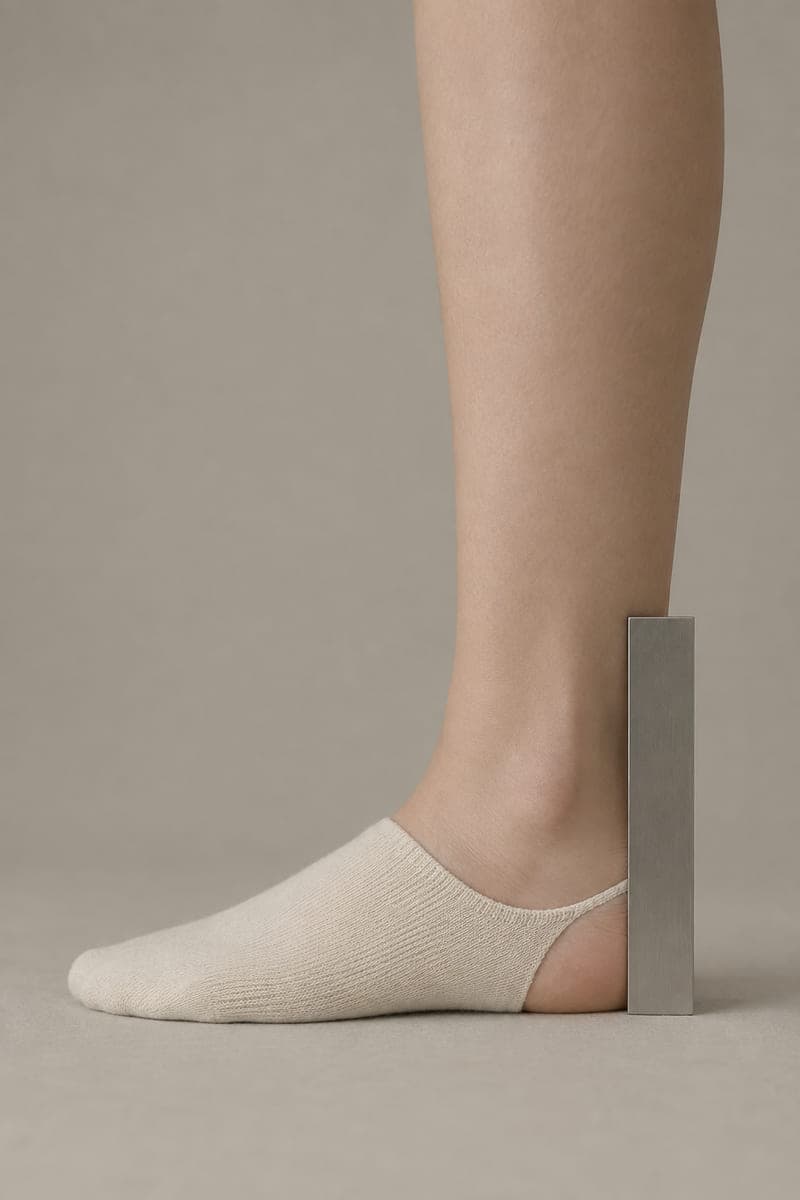
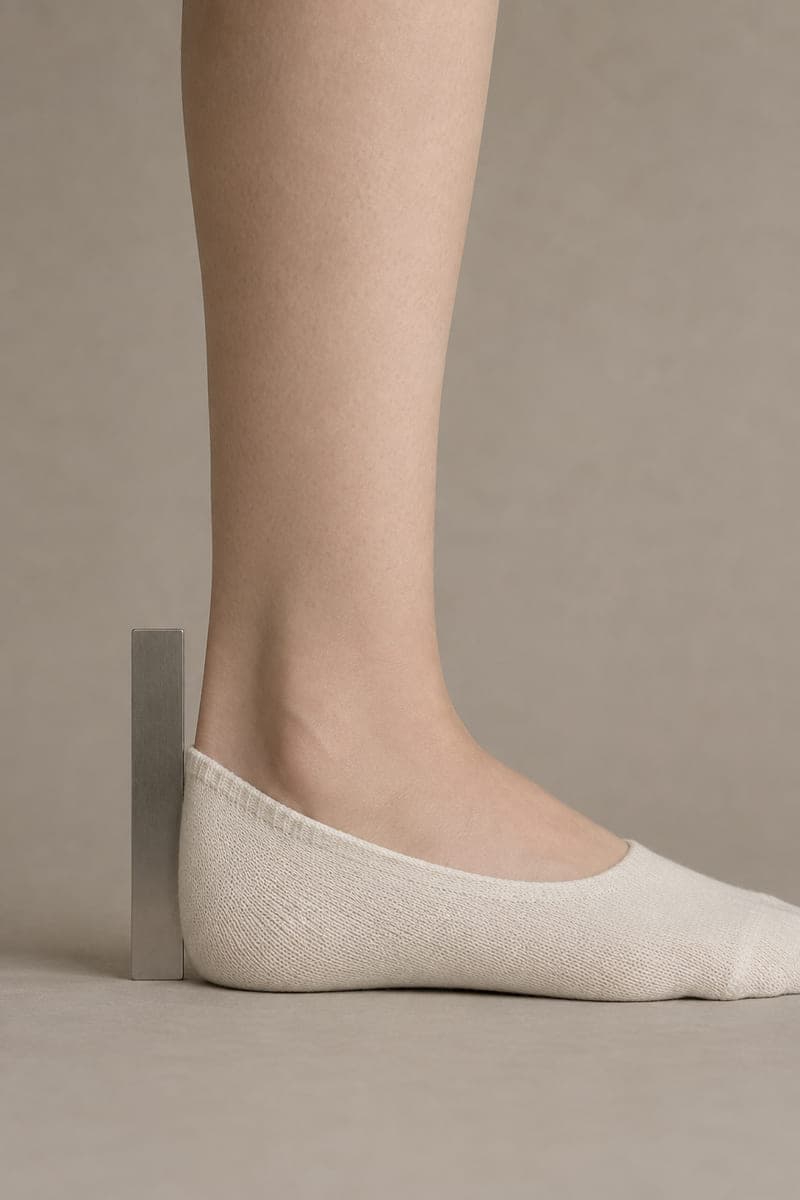
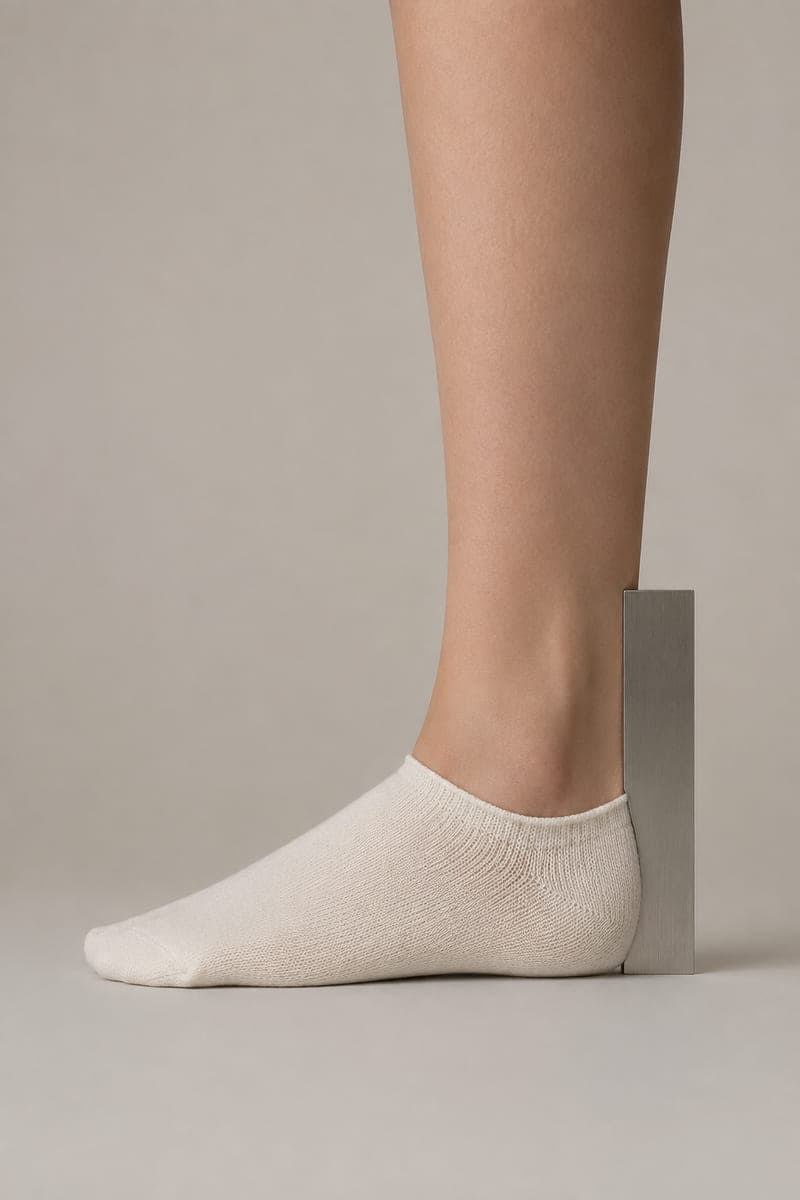
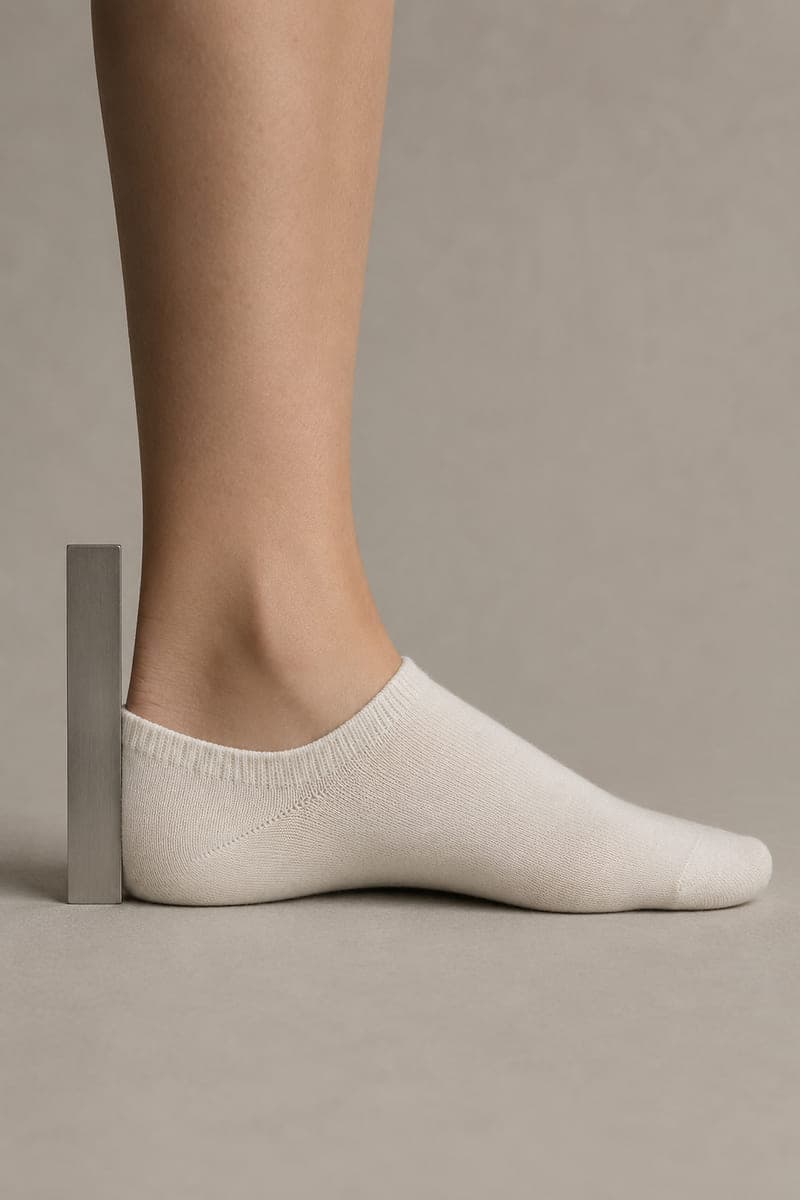
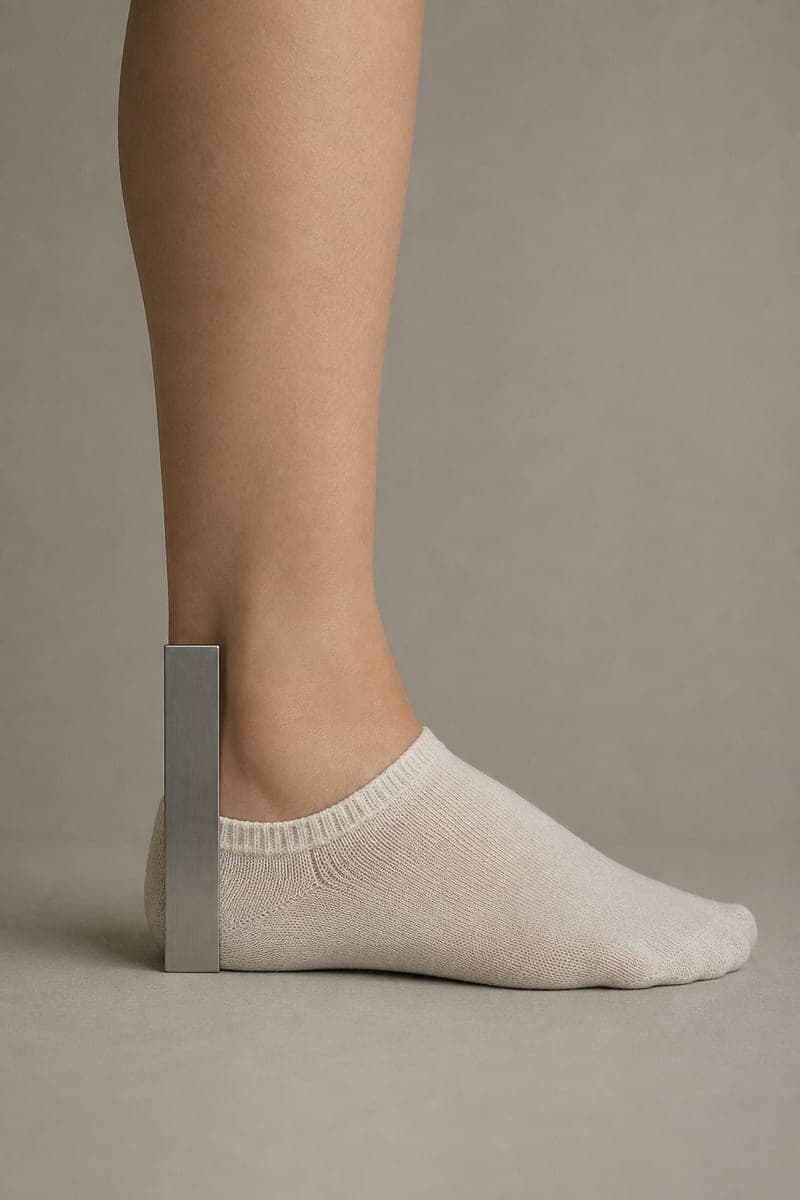
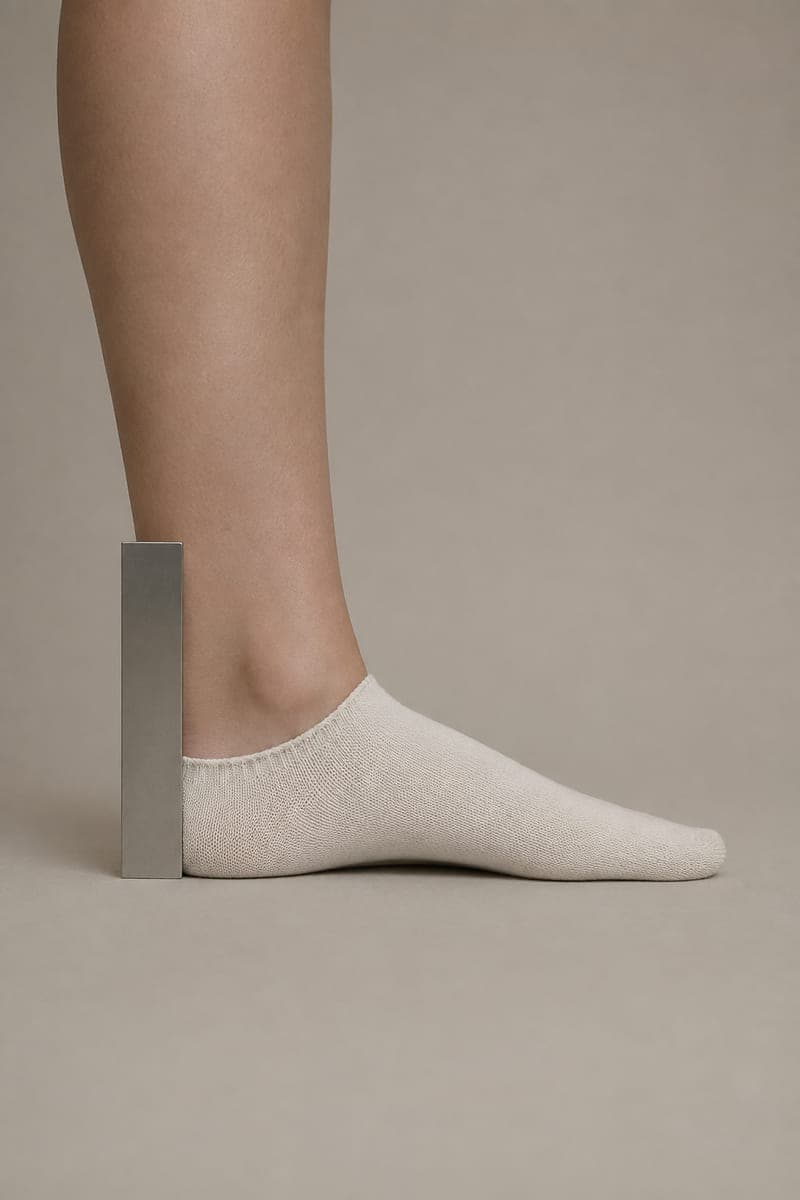
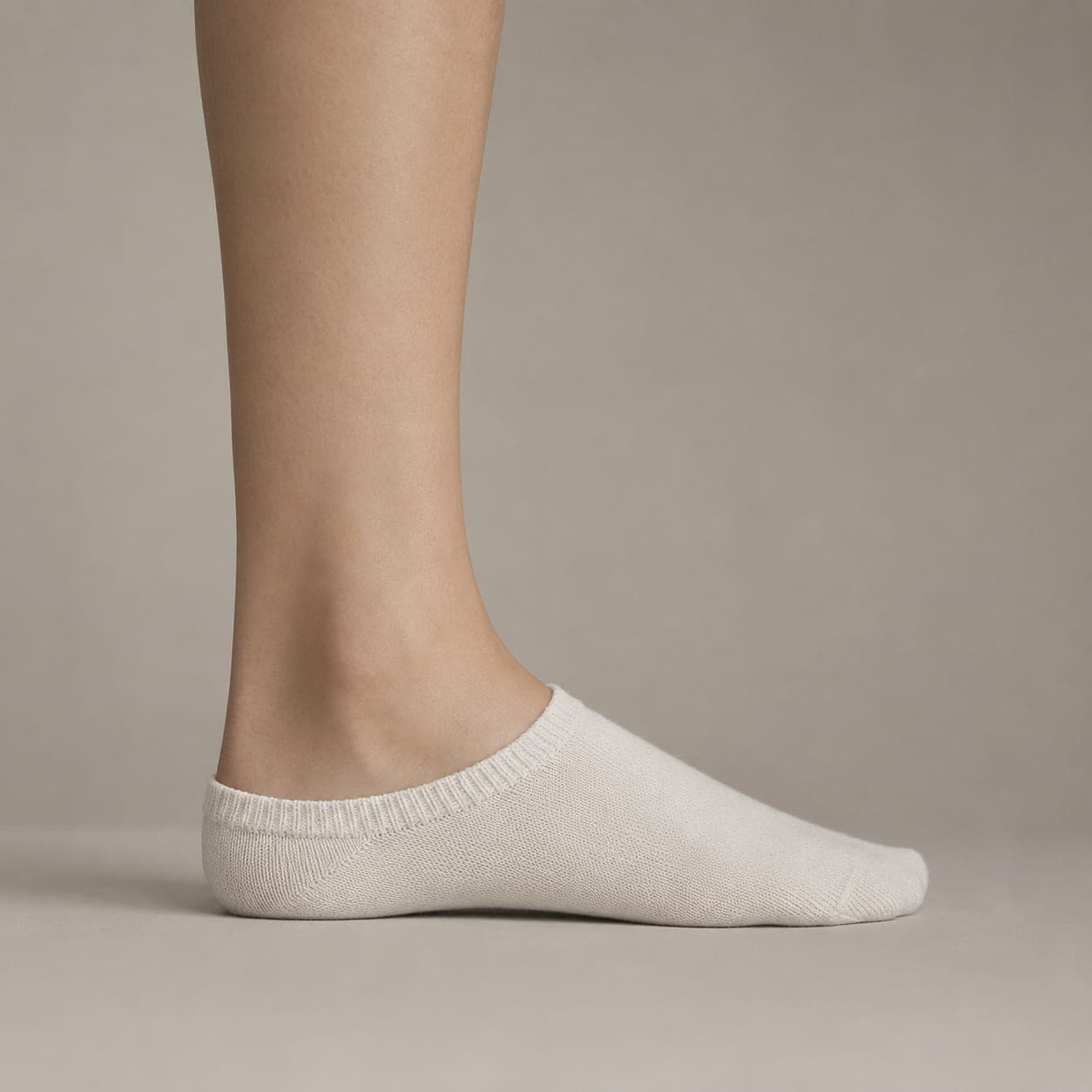
46mm cuff
for openings up to 62 mm
Boat 46
USD 10No silicone
9 mm of clearance in your shoe
Hidden socks, measured in millimetres
Measure the opening of your shoe. That number decides which sock stays hidden, not the sock's name.
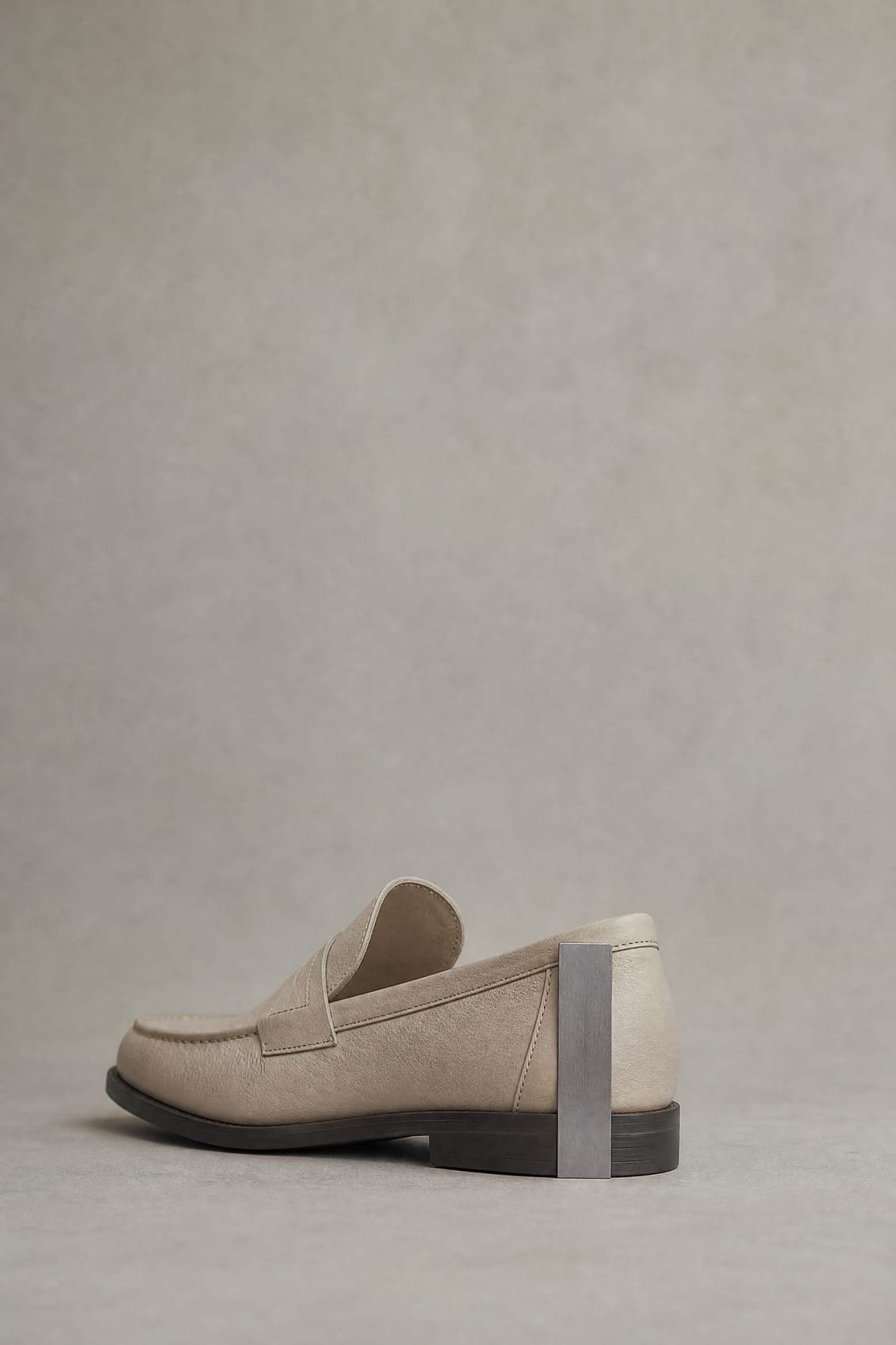
One. The opening of the shoe
55 mm
Measured at the back, from the surface up to the lowest point of the opening.
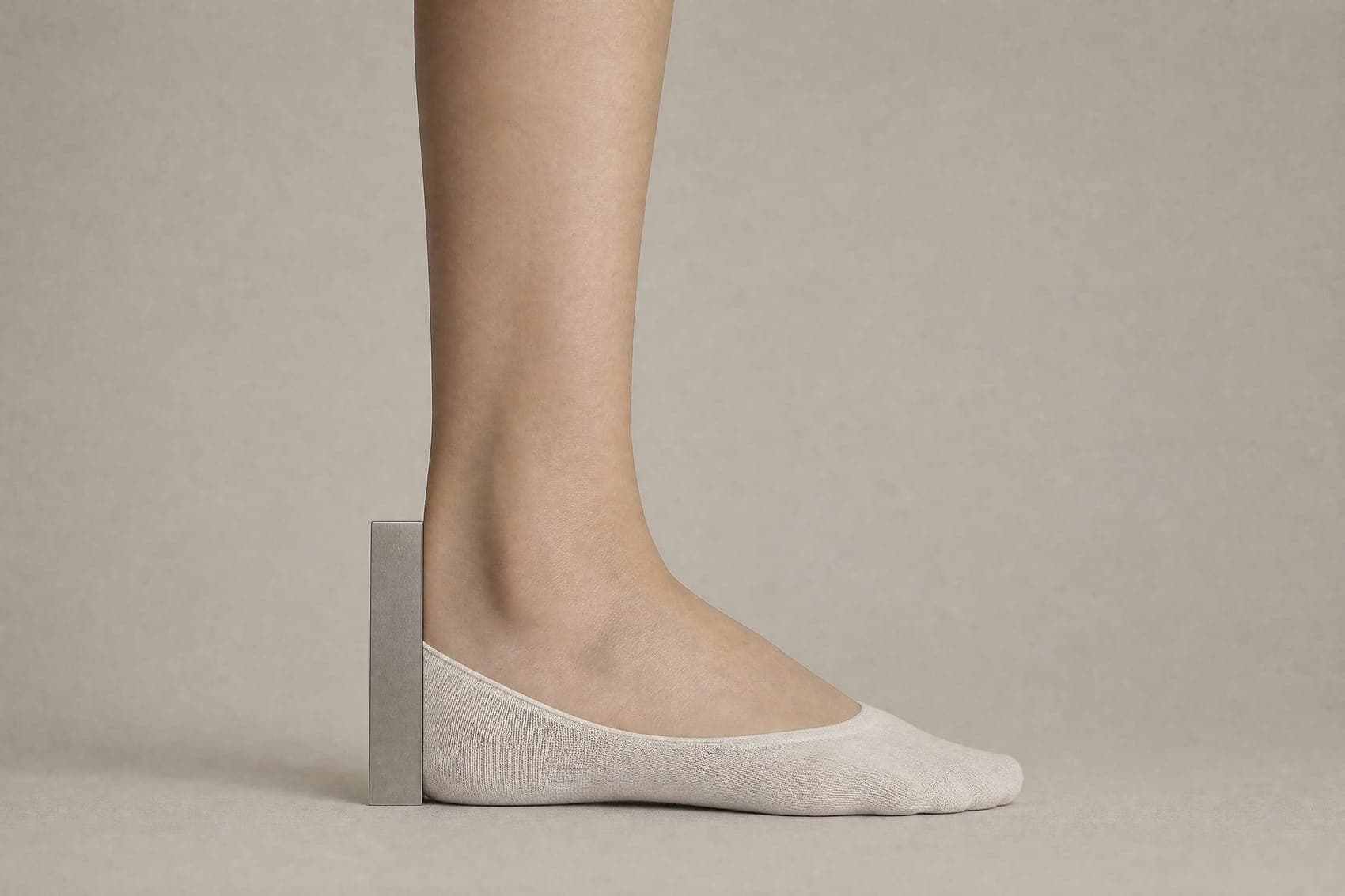
Two. The cuff of the sock
42 mm
Measured the same way, from the surface up to the top edge.
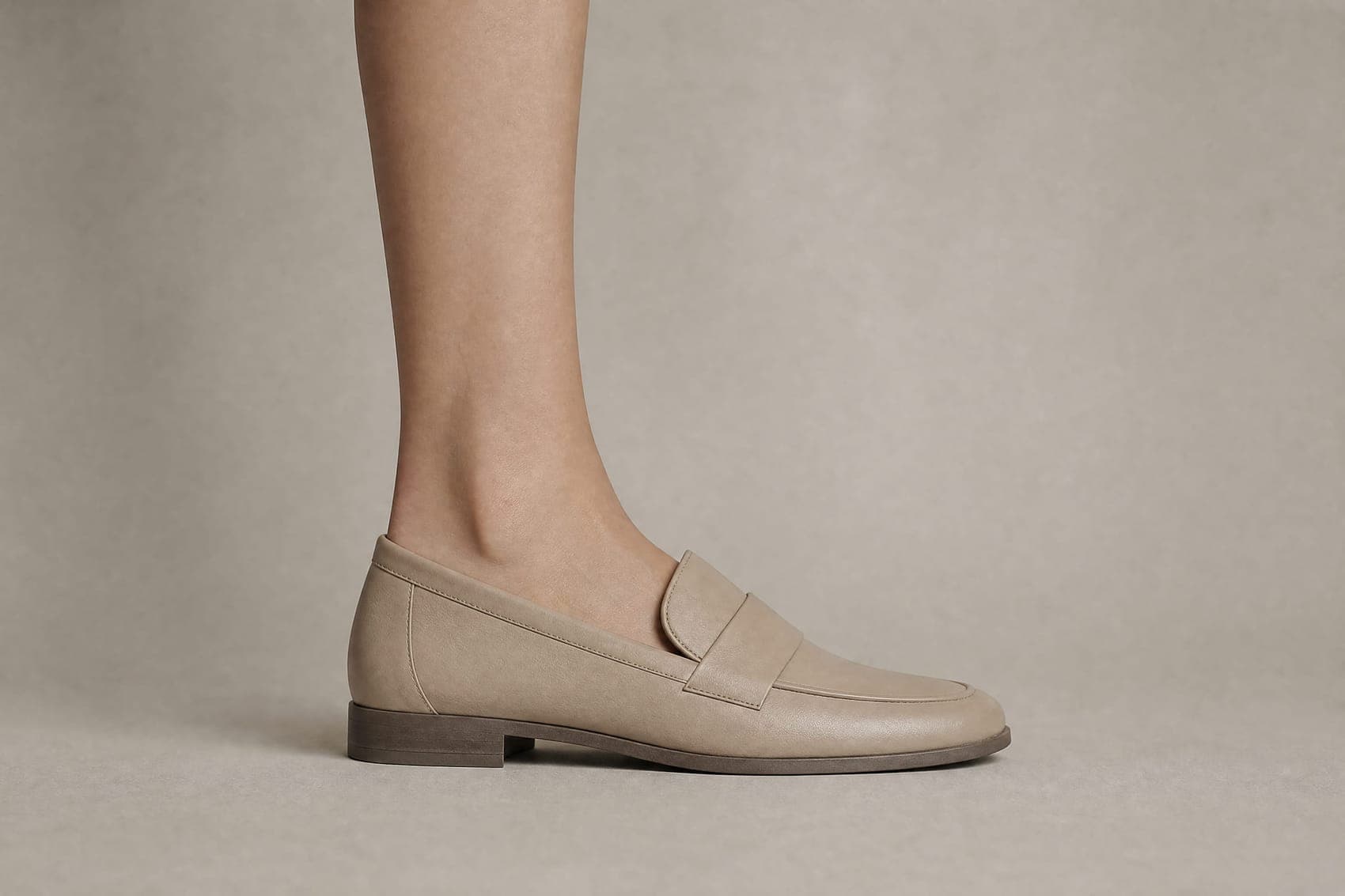
Three. What is left over
13 mm of clearance
The sock sits below the opening, so there is nothing to see.
55 millimetres minus 42 millimetres equals 13 millimetres of clearance.
No sock stays up in every shoe on every foot. Cuff height, heel shape, how the shoe fits and how you walk all matter. We give you the measurements so you can compare them to your own shoes.
Every height we make
41 socks, from a 22 mm cuff to a 58 mm one. Nothing above the ankle bone, in either direction. Prices run USD 10 to USD 112.
Every column is measured from the same floor: the surface the sole rests on. The taller the column sits, the higher the cuff.
Shoe Line
Not the brand of the shoe, not the name of the sock. The height of the opening at the back of the shoe you actually want to wear.
Between 5 and 16 mm below your opening, closest first. The highest cuff that still sits below the opening is the one with the most fabric holding it on.
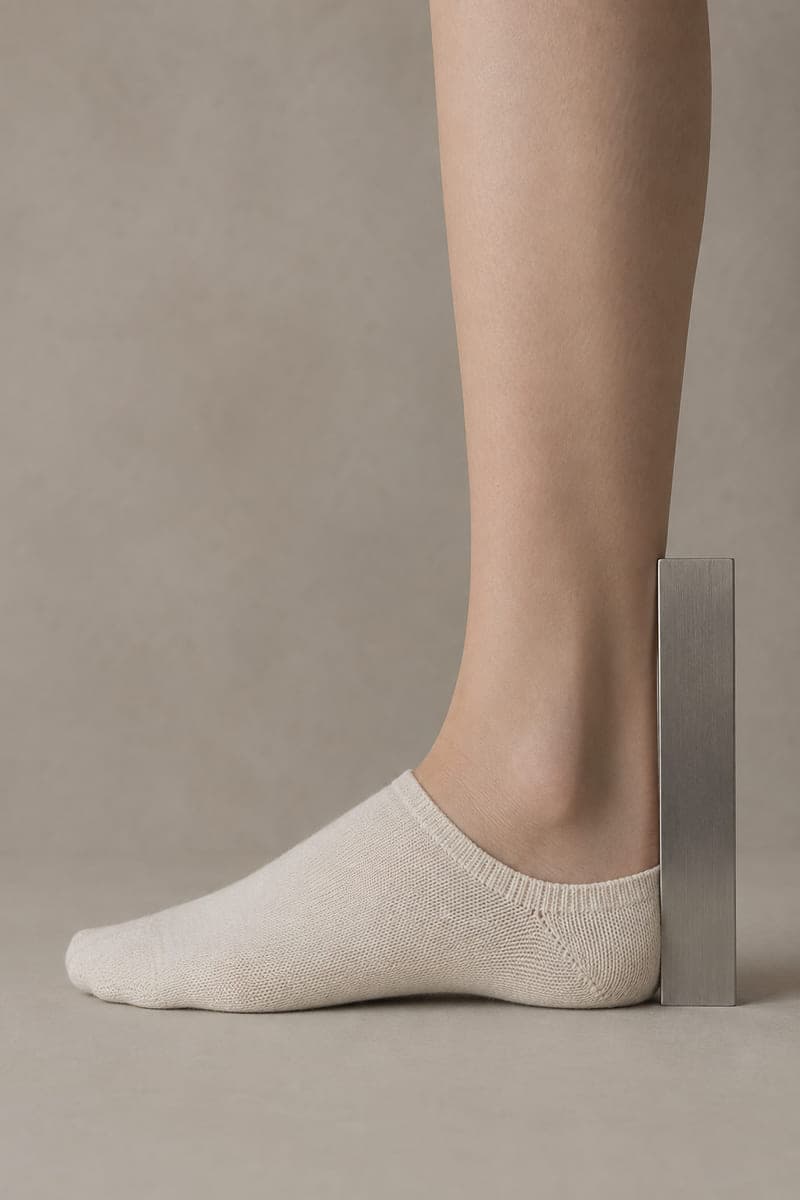
for openings up to 62 mm
USD 10No silicone
9 mm of clearance in your shoe
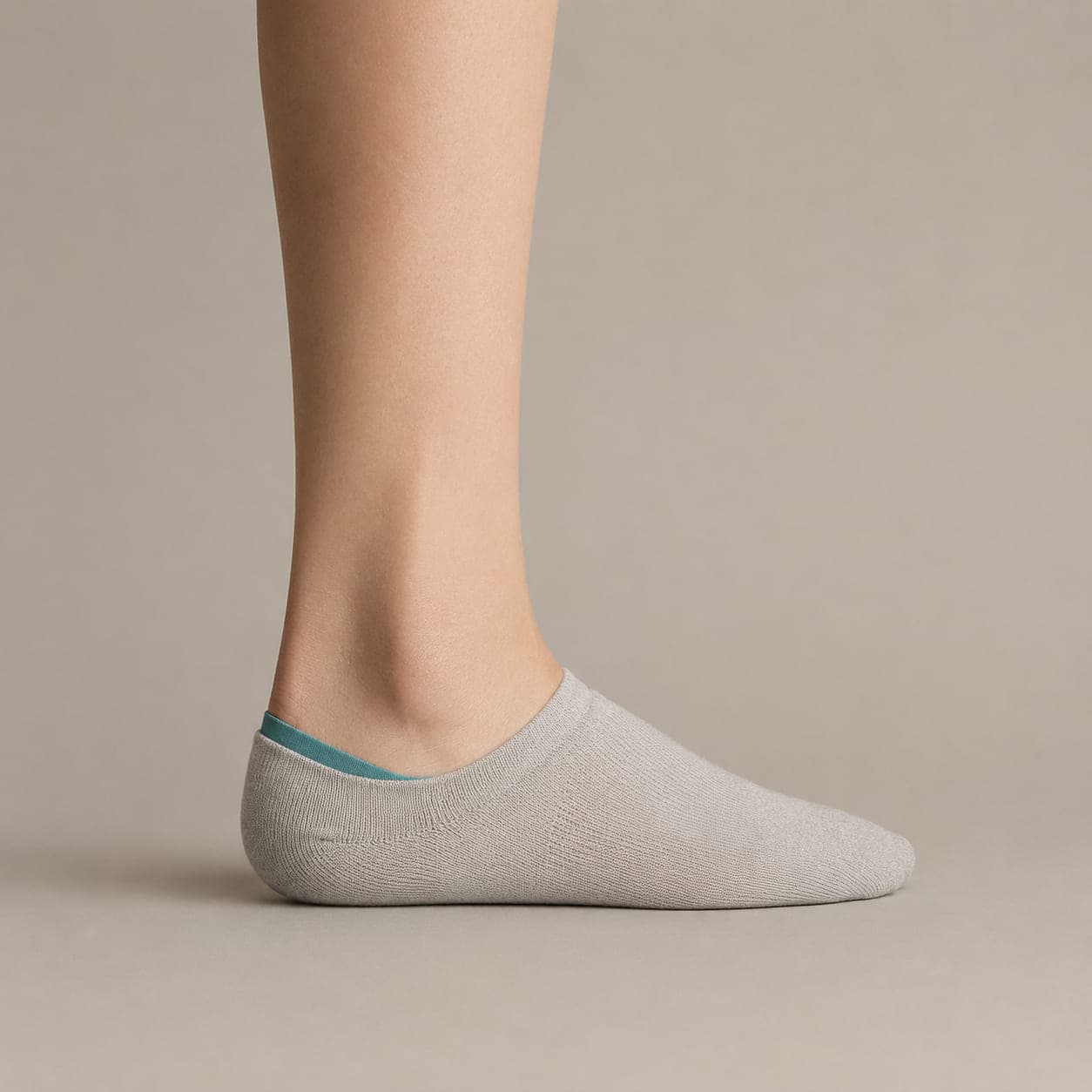
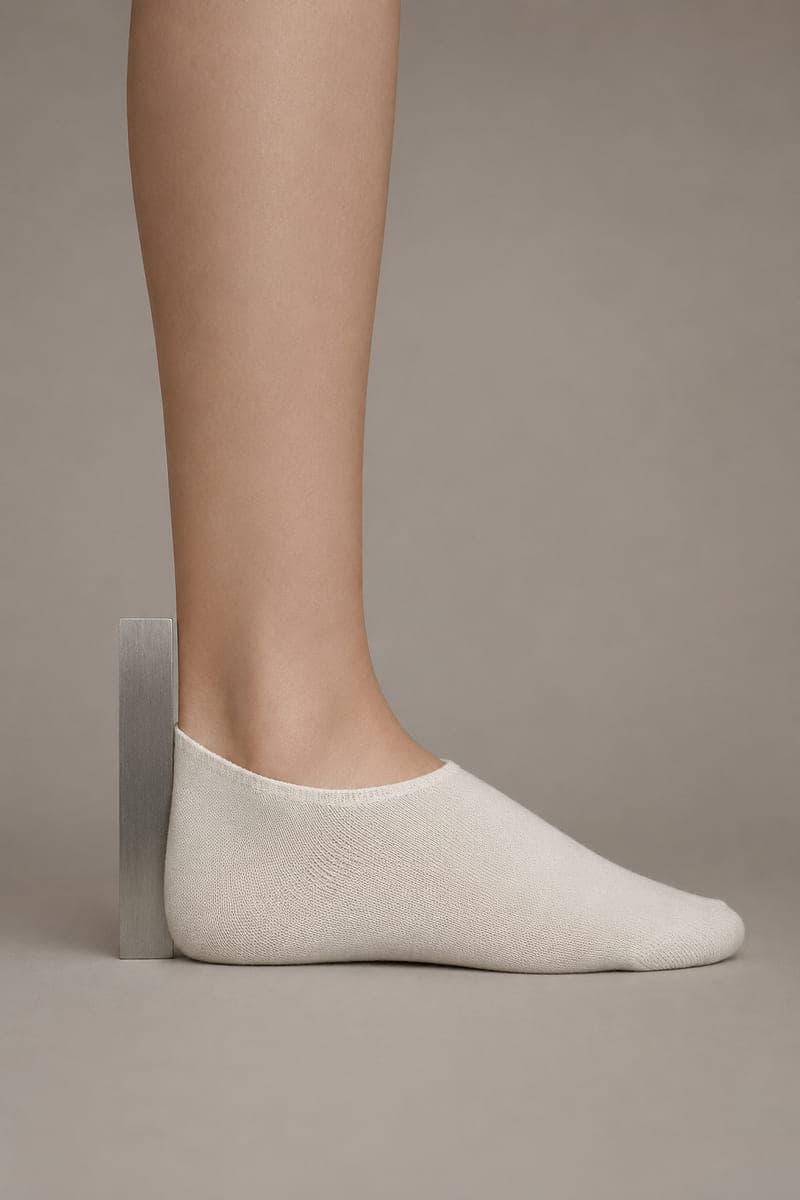
for openings up to 58 mm
USD 14With silicone
13 mm of clearance in your shoe
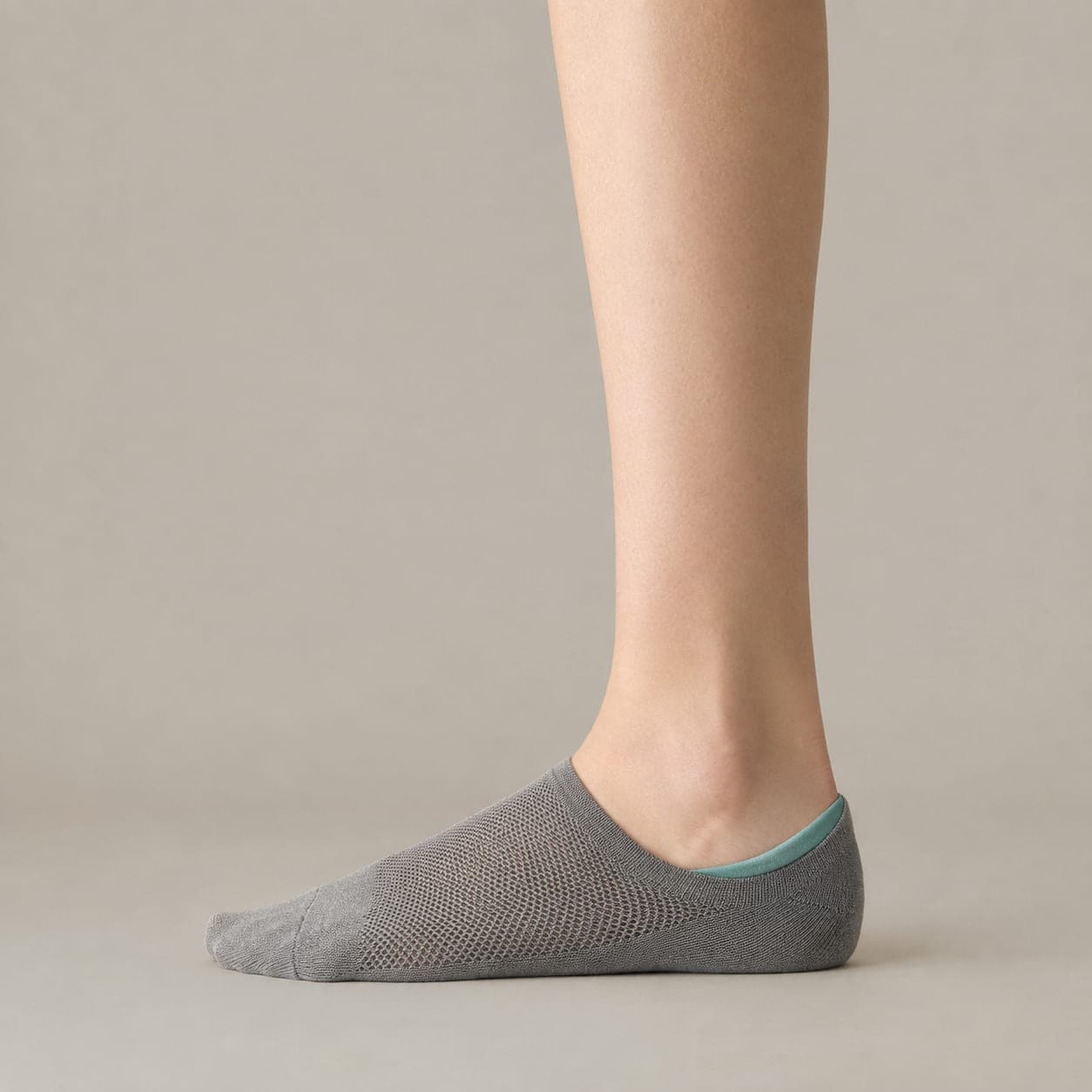
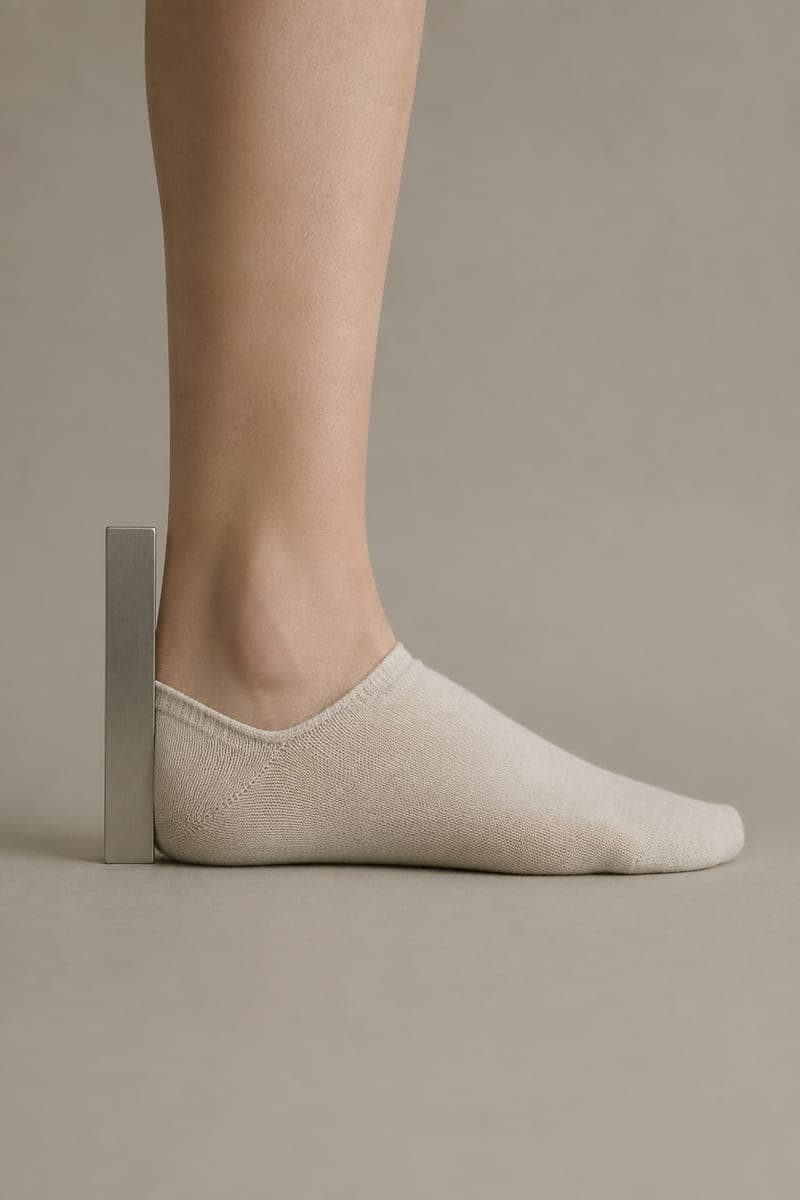
for openings up to 58 mm
USD 18With silicone
13 mm of clearance in your shoe
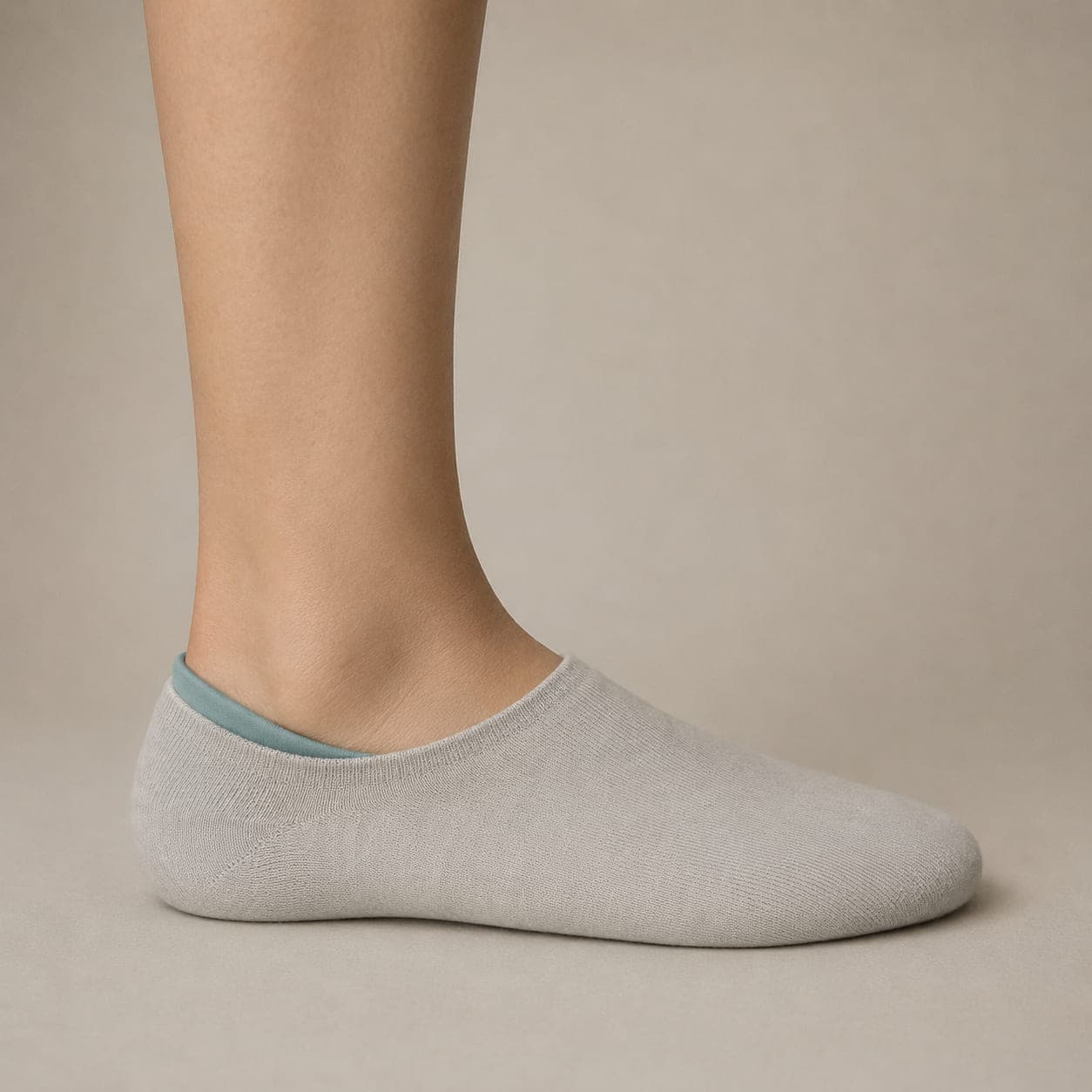
for openings up to 58 mm
USD 22With silicone
13 mm of clearance in your shoe
What we do not promise
No sock stays up in every shoe on every foot. Cuff height, heel shape, how the shoe fits and how you walk all matter. We give you the measurements so you can compare them to your own shoes.
Before anything else
It takes less than a minute and it is the only input that matters. A shoe-type chart is a guess; your shoe is a fact.
01
A table or a floor. Not a rug, not a shoe box. The measurement starts at whatever the sole rests on.
02
Follow the collar of the shoe round to the back. Where it dips lowest is the point that decides whether a sock shows.
03
Hold the rule upright against the outside of the heel. Read the millimetres. That single number is what we need.
Cuff height is taken at the back, from the surface the sole rests on to the top edge of the sock. Same floor, same direction, same units. That is the only reason the subtraction means anything.
What holds it on
Every sock states its hold type and, where there is silicone, the width of the band in millimetres. 16 of 41 have no silicone at all.

One small patch at the centre of the heel. The least material against the skin, and the least surface doing the work.

A continuous band along the whole heel curve. Spreads the contact instead of concentrating it at one point.

The same shape, much wider. More silicone is not automatically better; it depends on your heel. It is also more obvious to feel.

Two thin bands with knit between them. Some heels hold better on two narrow lines than on one wide one.

Silicone all the way round, including across the instep. The most contact we make, and the item most likely to bother sensitive skin.
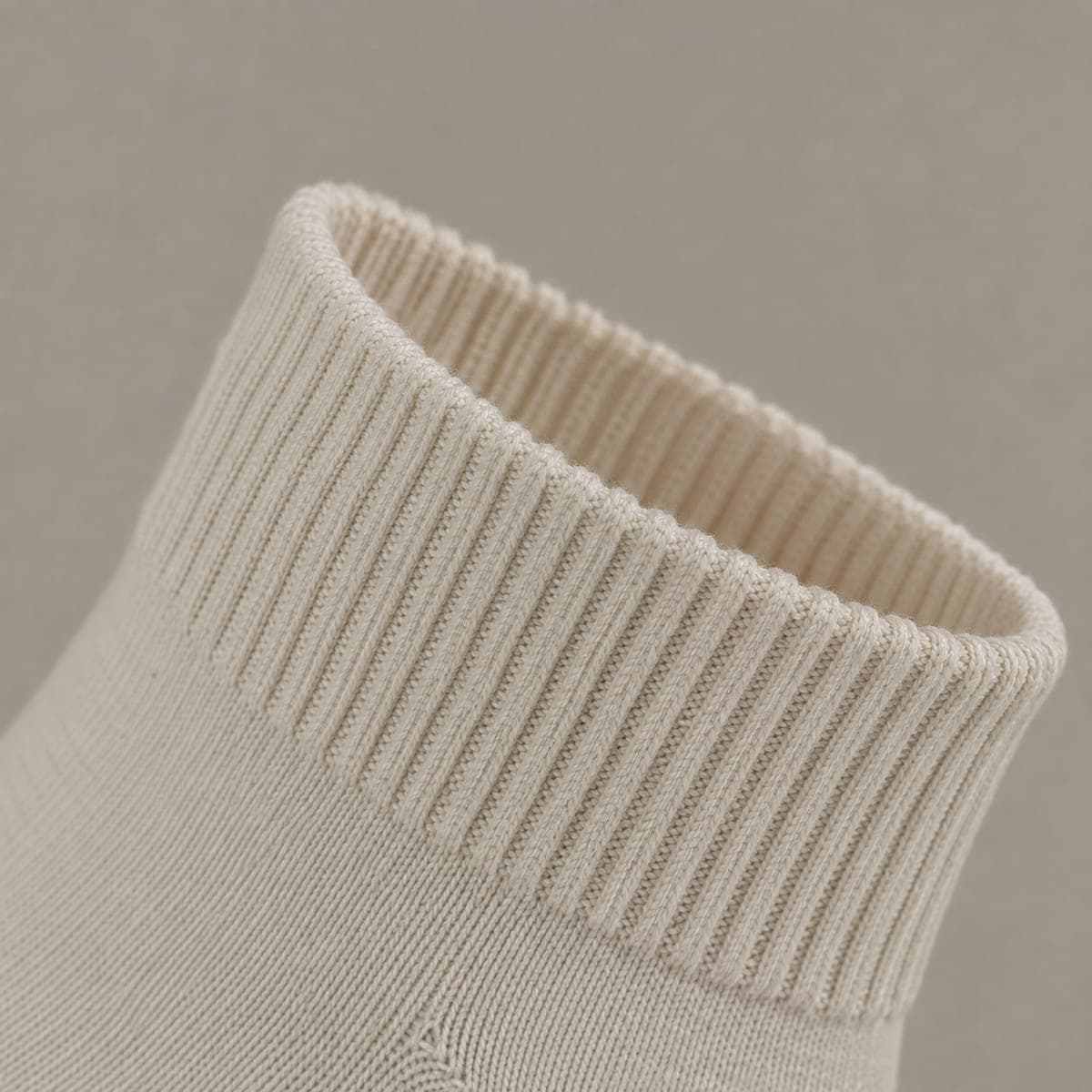
An elastic knitted band and nothing else. Typically holds less firmly than silicone, but there is nothing on your skin.
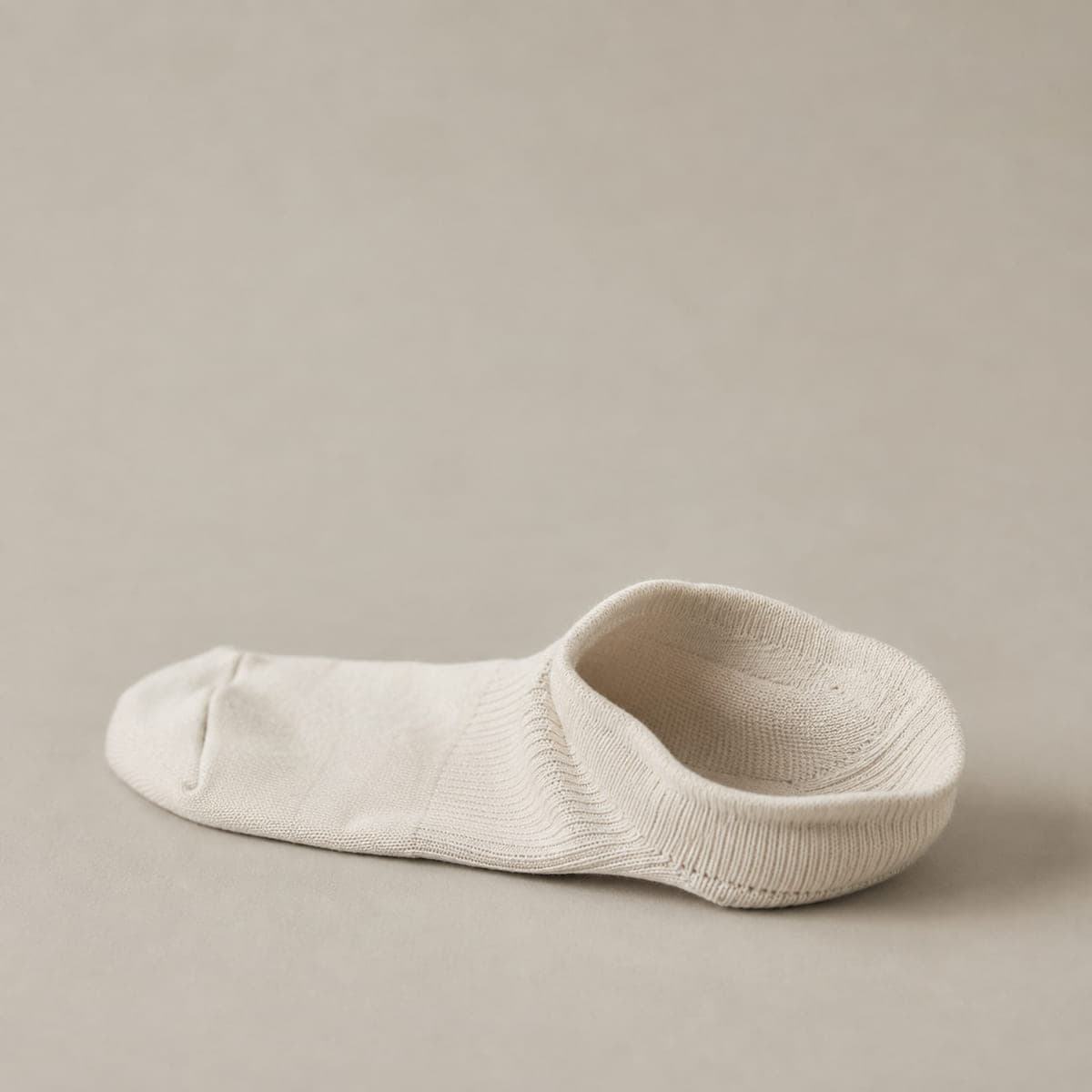
The heel is knitted deeper so the sock has somewhere to sit rather than something to grip. On a narrow heel this often beats a band alone.

New on the left, washed many times on the right. The grip fades gradually. That is wear, not a fault. Silicone peeling away from the fabric in the first weeks is a fault.
Silicone sits against your skin. Some people find it uncomfortable or irritating. 16 of our 41 socks have no silicone anywhere. See the silicone-free socks.
Six lines
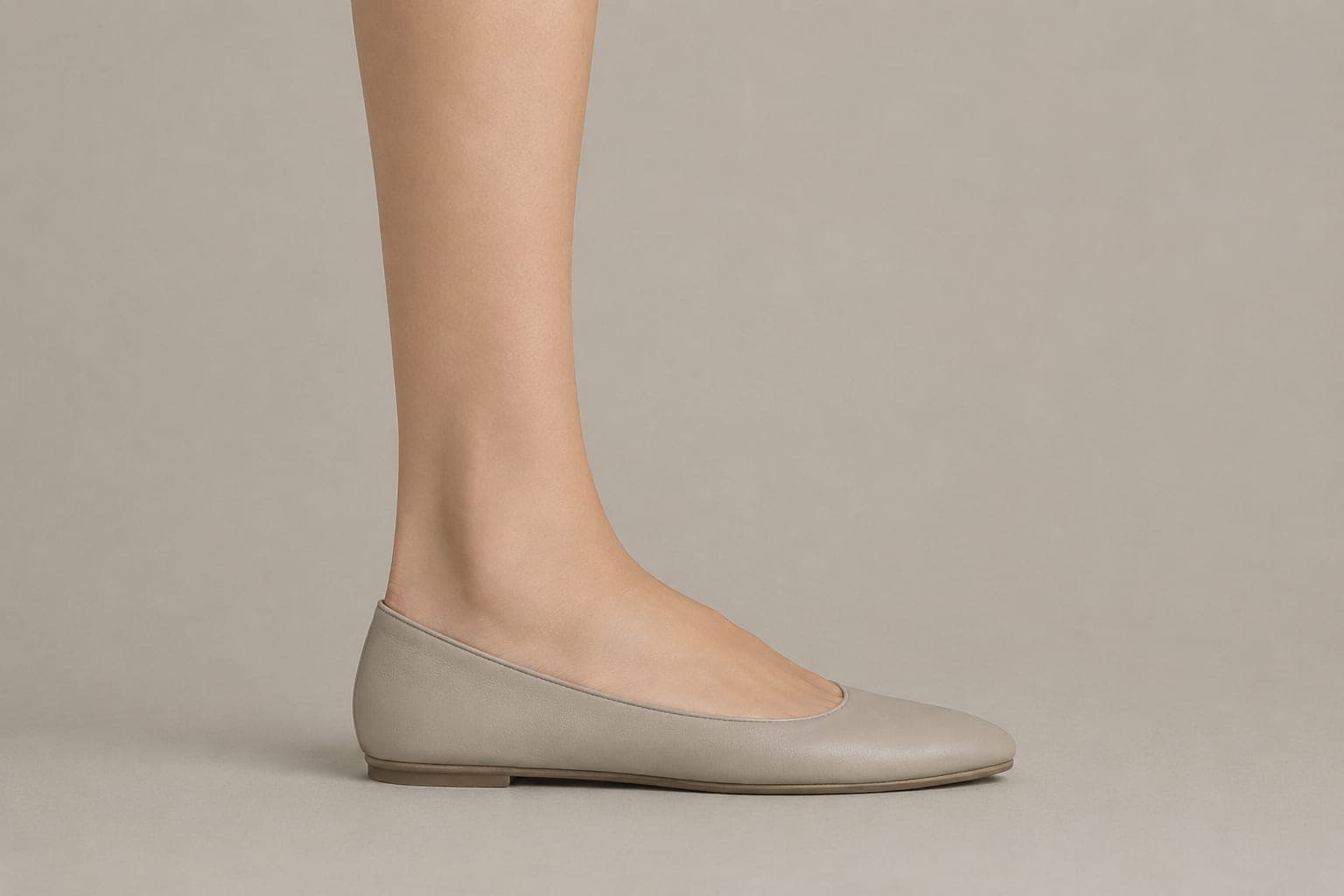
The lowest cuffs we make
A deep V at the front and almost nothing at the back. These sit below the opening of ballet flats and low loafers.
A 22 mm cuff has very little fabric holding it. If silicone doesn't work for your heel shape, this line is not for you.
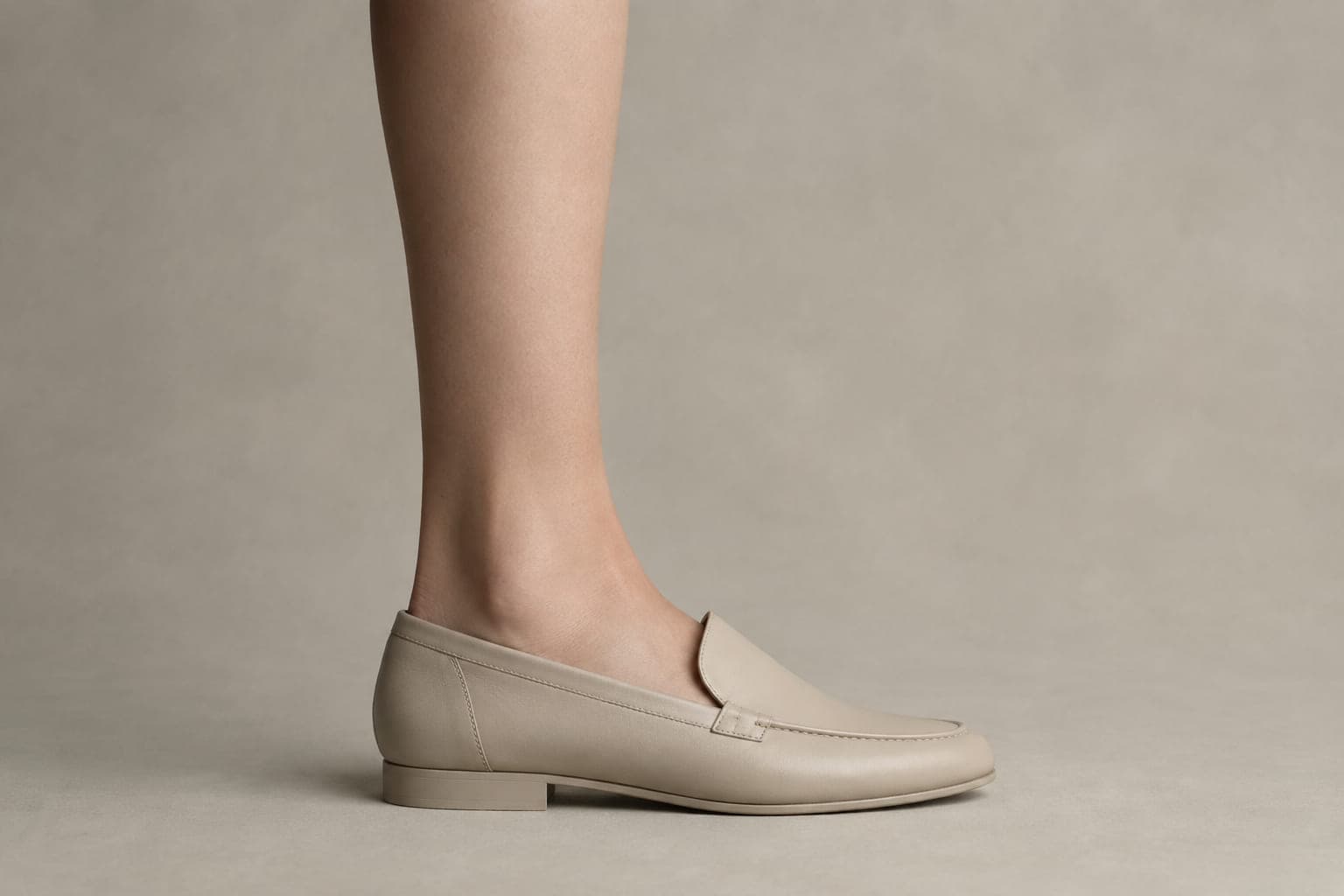
The everyday height
The heights most people end up buying twice. Enough fabric to hold shape, still under the opening of most loafers and low trainers.
A 42 mm cuff will show above a shoe whose opening is lower than 42 mm. Check the number against your own shoe.
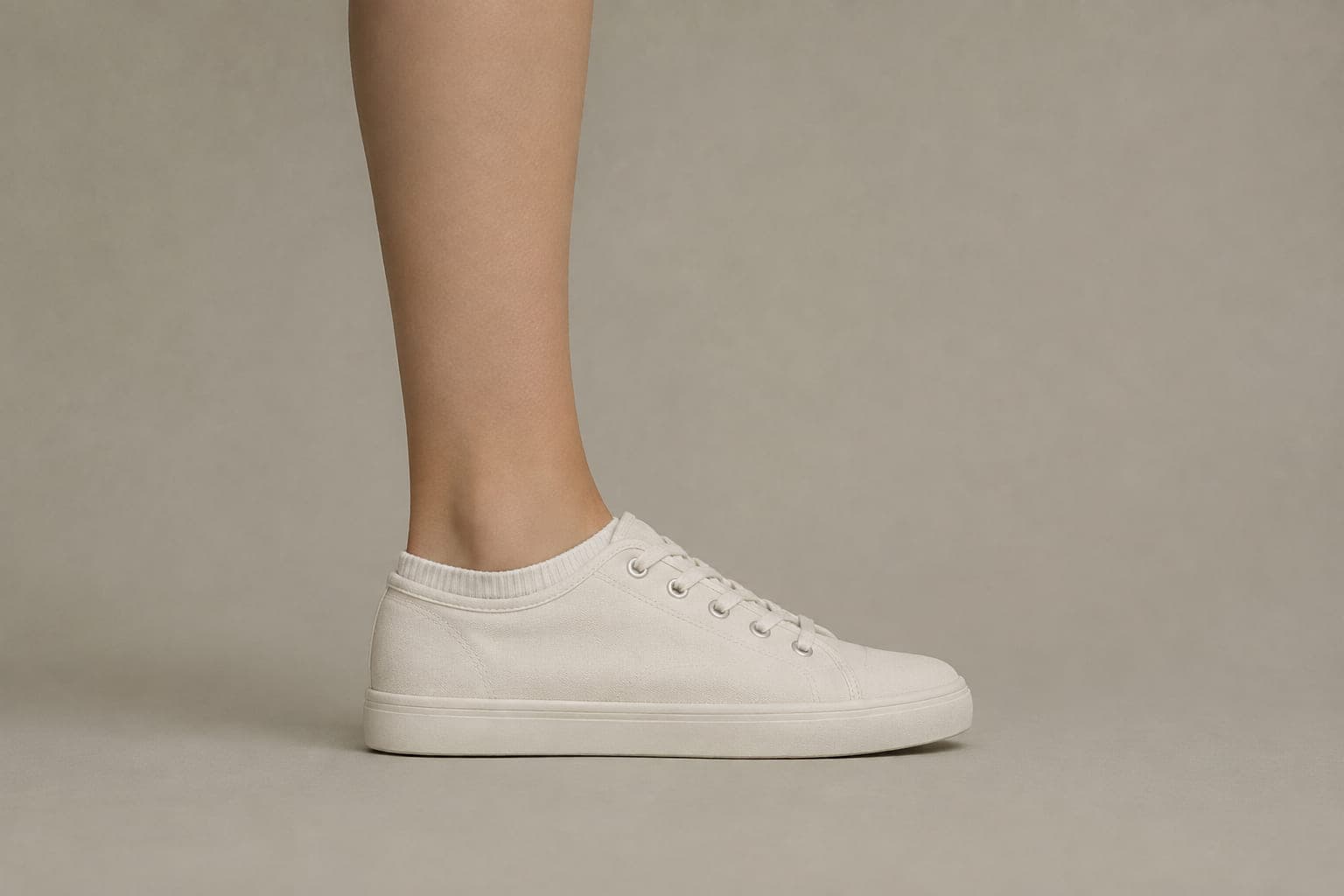
A visible edge, on purpose
Ribbed cuffs with no silicone at all. These are meant to sit at or just above the opening of a trainer or a boat shoe.
This is the highest coverage we make. If you want anything above the ankle, we don't sell it.
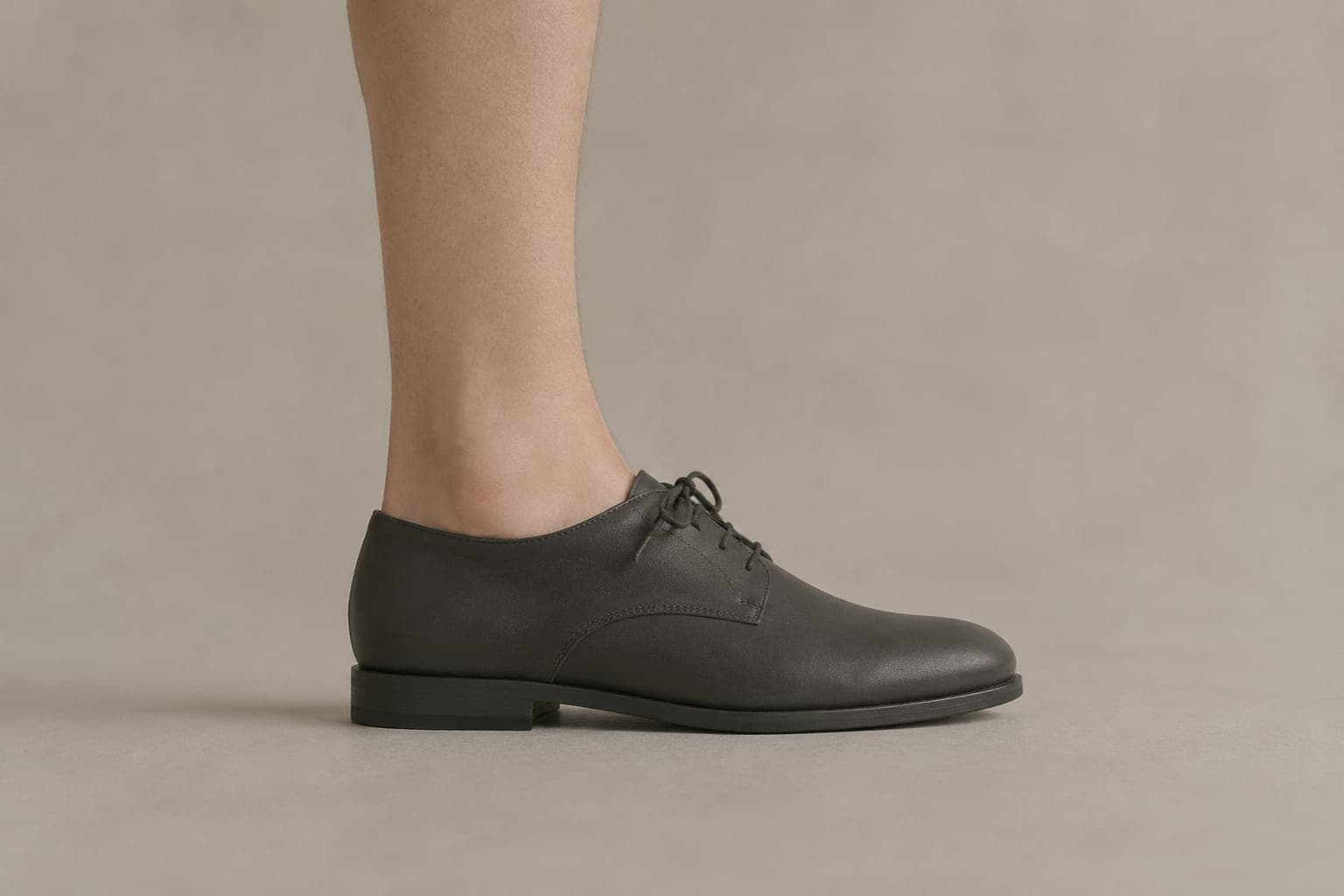
No silicone anywhere
Held by an elastic knitted band and, on two of them, by a deeper heel pocket. Nothing sits against your skin except yarn.
Typically holds less firmly than silicone, but there is nothing on your skin.
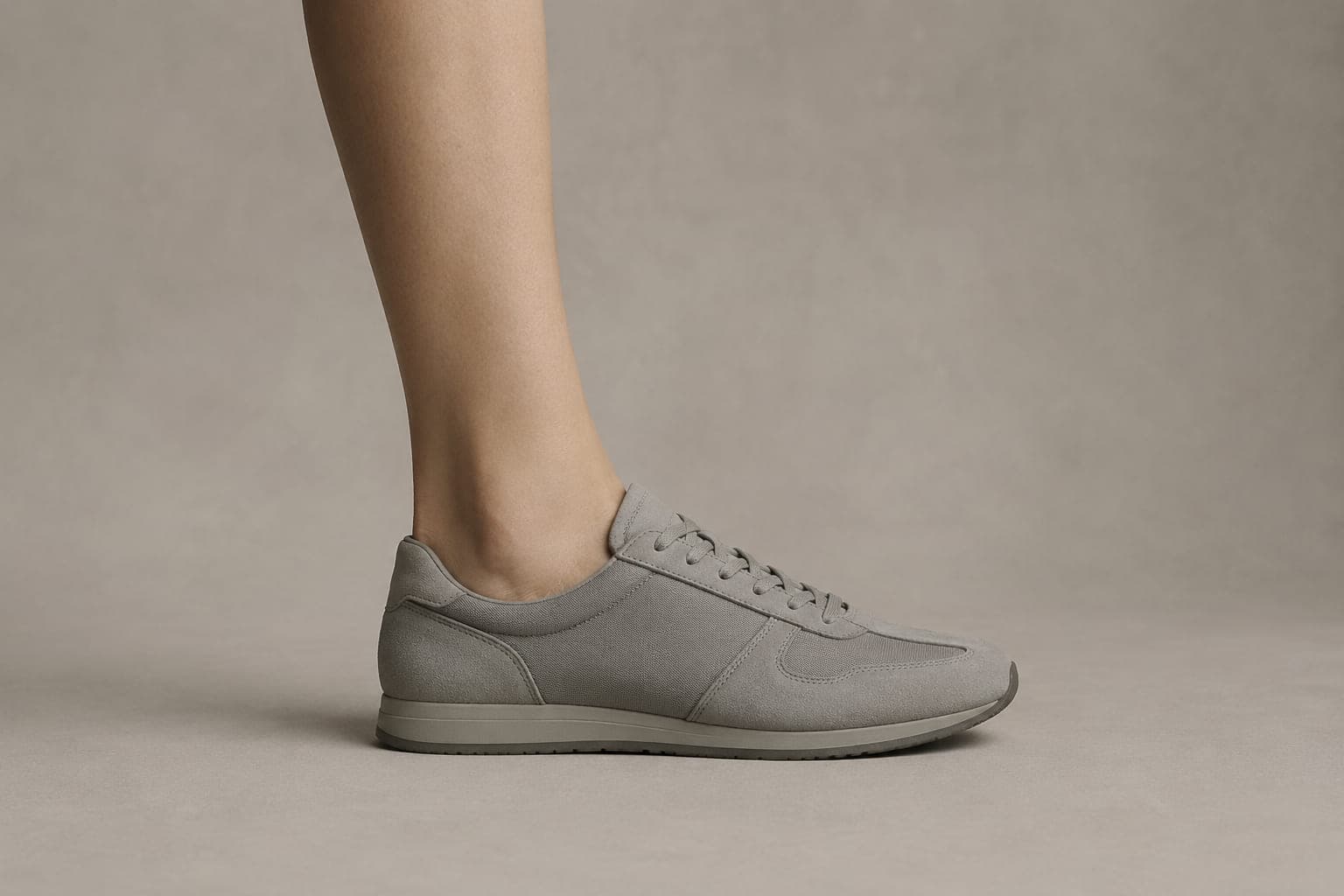
More silicone, not more promises
Wider arcs, twin bands and a full ring. For heels that silicone already suits and where a narrow dot has not been enough.
More silicone is not automatically better. It depends on your heel.
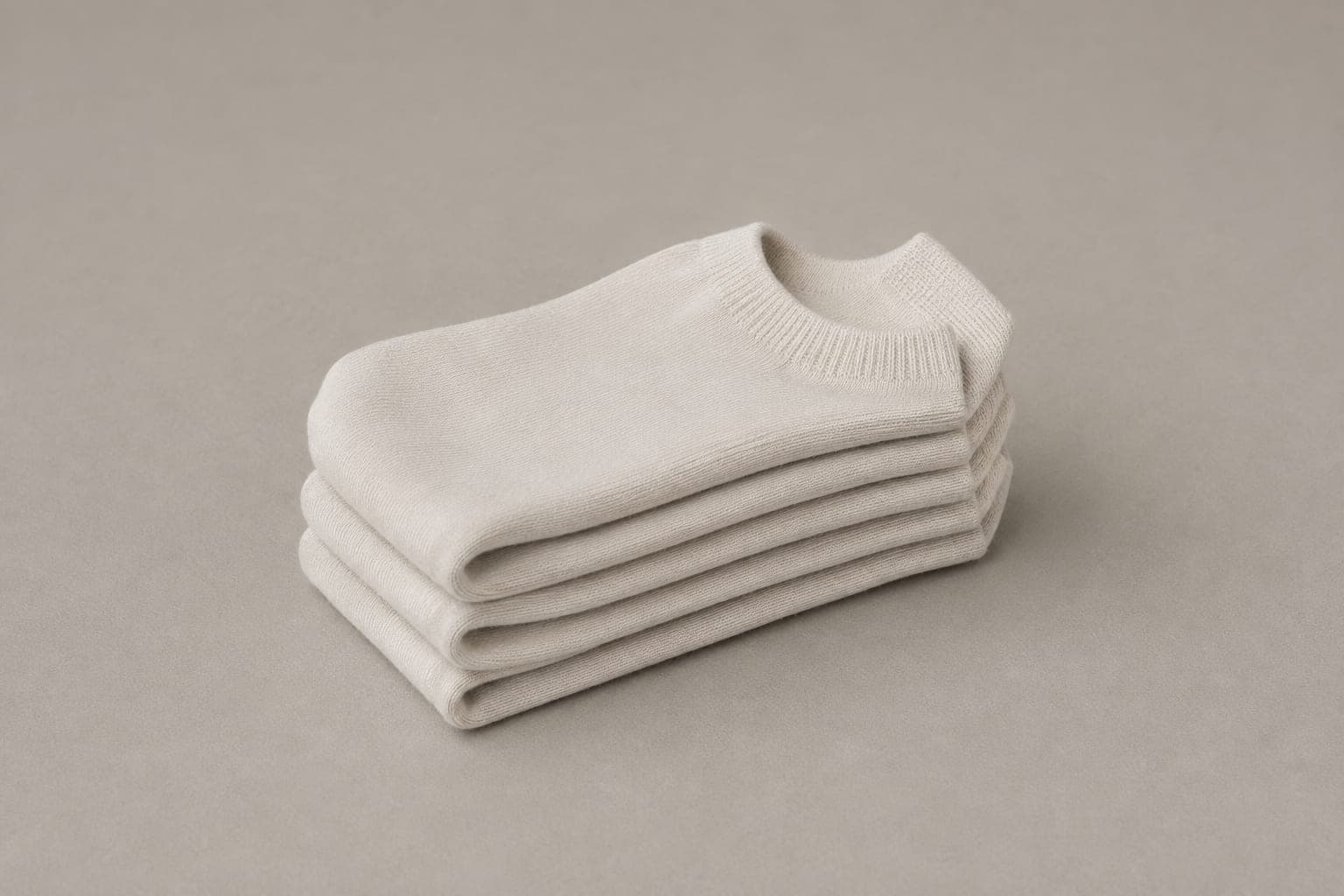
The same sock, again
Restock packs of one item. We don't mix heights or hold types in a pack, because the whole point is that you already know which number works.
Multipacks are sealed. Once the seal is open they cannot be returned.
Four things we will not tell you
This category is sold on promises that nobody can keep. Here is what we say instead, and why.
Before you buy
We can't let you try them on and send them back. That's why we give you the millimetres before you buy. Send us the opening of your shoe and what has gone wrong before, and we will tell you which of ours fits, or that none of them does.
Standard shipping is free on orders of USD 45 and over. All prices on this site are in US Dollars (USD). One-off purchases only; there is no subscription and nothing renews.